Antitrypanosomal Activity and Acute Toxicity of Euphorbia hirta Leaf Extract and a Green-Synthesized Vanadium-Based Nanoparticles against Trypanosoma brucei brucei in Mice

Authors

  • Funmilayo Ibilola Paul
    Federal College of Veterinary and Medical Laboratory Technology, Vom, Plateau State, Nigeria
    Department of Zoology, Faculty of Life Sciences, Federal University of Lafia, PMB 146, Lafia, Nasarawa State, Nigeria
  • James Ishaku Maikenti
    Department of Zoology, Faculty of Life Sciences, Federal University of Lafia, PMB 146, Lafia, Nasarawa State, Nigeria
  • Akwashiki Ombugadu
    Department of Zoology, Faculty of Life Sciences, Federal University of Lafia, PMB 146, Lafia, Nasarawa State, Nigeria
  • Mohammed Ahmed Ashigar
    Department of Zoology, Faculty of Life Sciences, Federal University of Lafia, PMB 146, Lafia, Nasarawa State, Nigeria
  • Hussein Oshomah Ahmed
    Department of Zoology, Faculty of Life Sciences, Federal University of Lafia, PMB 146, Lafia, Nasarawa State, Nigeria
  • Victoria Adamu Pam
    Department of Zoology, Faculty of Life Sciences, Federal University of Lafia, PMB 146, Lafia, Nasarawa State, Nigeria

Keywords:

Euphorbia hirta , Vanadium nanoparticles , Anti-trypanosomal activity , Trypanosoma brucei brucei , Phytochemicals , African trypanosomiasis

Abstract

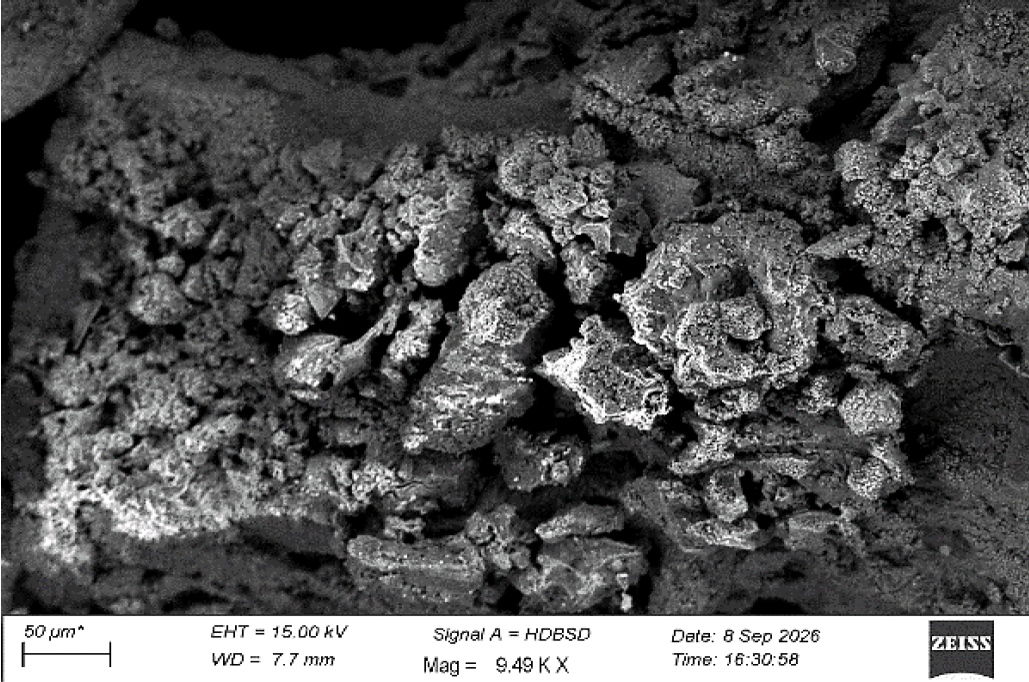
African trypanosomiasis remains an important parasitic disease for which limitations associated with existing trypanocidal drugs necessitate alternative therapeutic approaches. This study evaluated the phytochemical composition, in vitro and in vivo antitrypanosomal activity, and acute toxicity of aqueous Euphorbia hirta leaf extract and green-synthesized vanadium nanoparticles against Trypanosoma brucei brucei in mice. Aqueous E. hirta leaf extract was subjected to phytochemical and GC–MS analyses and used for green synthesis of vanadium nanoparticles, which were characterized by FTIR and SEM. Acute toxicity was assessed using Lorke’s method. In vitro and in vivo antitrypanosomal activities were evaluated against T. brucei brucei, with parasitaemia, body weight, PCV, and histopathological changes assessed in infected mice. Phytochemical screening detected alkaloids, flavonoids, tannins, saponins, steroids, terpenoids, coumarins, carbohydrates, and proteins, while GC–MS identified 25 constituents. In vitro, both treatments inhibited parasite motility in a concentration- and time-dependent manner, with complete inhibition at 10 mg/mL. Acute toxicity testing indicated LD₅₀ values ≥ 3000mg/kg for the synthesized nanoparticles and ≥ 5000mg/kg for the leaf extract. In vivo, significant differences were observed among treatment groups for parasitaemia (H = 18.30, p = 0.006), body weight (H = 19.19, p = 0.004), and PCV (H = 16.09, p = 0.012). Histopathological examination showed reduced tissue alterations in treated mice compared with infected untreated controls. E. hirta extract and green-synthesized vanadium nanoparticles demonstrated preliminary parasite-suppressive activity but were less effective than diminazene aceturate. Further studies incorporating dose optimization, mechanistic investigations, pharmacokinetics, and long-term safety assessment are suggested.
Dimensions

WHO (2023). Trypanosomiasis, human African (sleeping sickness). https://www.who.int/news-room/fact-sheets/detail/trypanosomiasis-human-african-(sleeping-sickness).

Aliyu, M. B., Allam, L., and Sarkey, A. K. B. (2021). Clinical manifestation and parasitological study of bovine trypanosomosis naturally occurring in a North Central State Nigeria. Savannah Veterinary Journal, 4(2), 38–48. https://doi.org/10.36759/svj.2021.120.

Iwu, M. M. (2014). Handbook of African medicinal plants (2nd ed.). CRC Press.

Kumar, S., Malhotra, R., and Kumar, D. (2010). Euphorbia hirta: Its chemistry, traditional and medicinal uses, and pharmacological activities. Pharmacognosy Reviews, 4(7), 58–61. https://doi.org/10.4103/0973-7847.65327.

Tona, L., Mesia, K., Ngimbi, N. P., Chrimwami, B., Okond’ahoka, C., Koto-te-Nyiwa, D. T., Apers, S., Hermans, N., Totté, J., Pieters, L., and Vlietinck, A. J. (2004). In vivo antimalarial activity of medicinal plants used in the Democratic Republic of Congo. Journal of Ethnopharmacology, 93(1), 27–32. https://doi.org/10.1016/j.jep.2004.02.024

Iravani, S. (2011). Green synthesis of metal nanoparticles using plants. Green Chemistry, 13(10), 2638–2650. https://doi.org/10.1039/C1GC15386B

Mead, R. (1988). The Design of Experiments: Statistical Principles for Practical Applications. Cambridge University Press.

Sofowora, A. (2008). Medicinal plants and traditional medicine in Africa (3rd ed.). Spectrum Books Limited.

Trease, G. E., & Evans, W. C. (1978). Pharmacognosy (11th ed.). Bailliere Tindall.

Harborne, J. B. (1973). Phytochemical methods. Chapman and Hall.

OECD (2001). OECD guidelines for the testing of chemicals: Acute oral toxicity. OECD Publishing.

Herbert, W. J., & Lumsden, W. H. R. (1976). Trypanosoma brucei: A rapid “matching” method for estimating parasitemia. Experimental Parasitology, 40(3), 427–431. https://doi.org/10.1016/0014-4894(76)90110-7

Lorke, D. (1983). A new approach to practical acute toxicity testing. Archives of Toxicology, 54, 275–287.

Carleton, H. M., Drury, R. A. B., & Wallington, E. A. (1967). Carleton’s histological technique (4th ed.). Oxford University Press.

Cayona, R., & Creencia, E. (2022). Phytochemicals of Euphorbia hirta L. And Their Inhibitory Potential Against SARS-CoV-2 Main Protease. Frontiers in Molecular Biosciences, 8, 801401.

Ajayi, E., Adeleke, M., Adewumi, T., & Adeyemi, A. (2017). Antiplasmodial activities of ethanol extracts of Euphorbia hirta whole plant and Vernonia amygdalina leaves in Plasmodium berghei-infected mice. Journal of Taibah University for Science, 11(6), 831-835. https://doi.org/10.1016/j.jtusci.2017.01.008

Cushnie, T. P. T., Cushnie, B., & Lamb, A. J. (2014). Alkaloids: An overview of their antibacterial, antibiotic-enhancing and antivirulence activities. International Journal of Antimicrobial Agents, 44(5), 377–386. https://doi.org/10.1016/j.ijantimicag.2014.06.001

Scalbert, A. (1991). Antimicrobial properties of tannins. Phytochemistry, 30(12), 3875–3883. https://doi.org/10.1016/0031-9422(91)83426-L

Sparg, S. G., Light, M. E., & Van Staden, J. (2004). Biological activities and distribution of plant saponins. Journal of Ethnopharmacology, 94(2–3), 219–243. https://doi.org/10.1016/j.jep.2004.05.016

Sharma, N., Samarakoon, K. W., Gyawali, R., Park, Y. H., Lee, S. J., Oh, S. J., Lee, T. H., & Jeong, D. K. (2014). Evaluation of the antioxidant, anti-inflammatory, and anticancer activities of Euphorbia hirta ethanolic extract. Molecules (Basel, Switzerland), 19(9), 14567–14581. https://doi.org/10.3390/molecules190914567

Ogbadoyi, E. O., Abdulganiy, A. O., Adama, T. Z., & Okogun, J. I. (2007). In vivo antitrypanosomal activity of some medicinal plant extracts. African Journal of Biotechnology, 6(9), 1202–1206.

Nwodo, N. J., Ibezim, A., Ntie-Kang, F., Adikwu, M. U., & Mbah, C. J. (2015). Anti-trypanosomal activity of Nigerian plants and their constituents. Molecules (Basel, Switzerland), 20(5), 7750–7771. https://doi.org/10.3390/molecules20057750

Subramani, P., Murugappan, S., Ganesh, G., Jones, S., & Mani, D. (2024). Determination of Phytochemical Properties "Amman Pacharisi"-Euphorbia hirta Linn. Journal of Pharmacy & Bioallied Sciences, 16(Suppl 5), S4697–S4700. https://doi.org/10.4103/jpbs.jpbs_822_24

Perumal, S., & Mahmud, R. (2013). Chemical analysis, inhibition of biofilm formation and biofilm eradication potential of Euphorbia hirta L. against clinical isolates and standard strains. BMC Complementary and Alternative Medicine, 13, 346. https://doi.org/10.1186/1472-6882-13-346

Desbois, A. P., & Smith, V. J. (2010). Antibacterial free fatty acids: Activities, mechanisms and biotechnological potential. Applied Microbiology and Biotechnology, 85(6), 1629–1642. https://doi.org/10.1007/s00253-009-2355-3

Rahman, M. M., Ahmad, S. H., Mohamed, M. T., & Ab Rahman, M. Z. (2014). Antimicrobial compounds from leaf extracts of Jatropha curcas, Psidium guajava, and Andrographis paniculata. The Scientific World Journal, 2014, 635240. https://doi.org/10.1155/2014/635240

Yuet Ping, K., Darah, I., Chen, Y., Sreeramanan, S., & Sasidharan, S. (2013). Acute and subchronic toxicity study of Euphorbia hirta L. methanol extract in rats. BioMed Research International, 2013, 182064.

Rajeh, M. A., Kwan, Y. P., Zakaria, Z., Latha, L. Y., Jothy, S. L., & Sasidharan, S. (2012). Acute toxicity impacts of Euphorbia hirta L extract on behavior, organs body weight index and histopathology of organs of the mice and Artemia salina. Pharmacognosy Research, 4(3), 170–177. https://doi.org/10.4103/0974-8490.99085

Singh, N., Manshian, B., Jenkins, G. J. S., Griffiths, S. M., Williams, P. M., Maffeis, T. G. G., Wright, C. J., & Doak, S. H. (2010). NanoGenotoxicology: The DNA-damaging potential of engineered nanomaterials. Biomaterials, 31(15), 3891–3914. https://doi.org/10.1016/j.biomaterials.2010.01.050

Zaman, K., Tendulkar, S., Karun, K., Felix, F., Akula, K. K., Hiremath, N., Ravedar, S., Salunkhe, T., Patel, J., Kavathekar, A., & Bhat, J. (2026). Euphorbia hirta L. as a potential resistance-modifying agent against ESKAPE pathogens: a systematic review. Frontiers in Pharmacology, 17, 1862731. https://doi.org/10.3389/fphar.2026.1862731

Singh, G., & Kumar, P. (2013). Phytochemical study and screening for antimicrobial activity of flavonoids of Euphorbia hirta. International Journal of Applied & Basic Medical Research, 3(2), 111–116. https://doi.org/10.4103/2229-516X.117082

Wenzler, T., Schumann Burkard, G., Schmidt, R. S., Mäser, P., Bergner, A., Roditi, I., & Brun, R. (2016). A new approach to chemotherapy: drug-induced differentiation kills African trypanosomes. Scientific Reports, 6, 22451. https://doi.org/10.1038/srep22451

Li, J., Zhou, H., Wang, J., Wang, D., Shen, R., Zhang, X., Jin, P., & Liu, X. (2016). Oxidative stress-mediated selective antimicrobial ability of nano-VO₂ against Gram-positive bacteria for environmental and biomedical applications. Nanoscale, 8(23), 11907–11923.https://doi.org/10.1039/c6nr02844f

Ayawa, N. G., Ramon-Yusuf, S. B., Wada, Y. A., Oniye, S. J., & Shehu, D. M. (2021). Toxicity study and anti-trypanosomal activities of aqueous and methanol whole plant extracts of Brillantaisia owariensis on Trypanosoma brucei-induced infection in BALB/c mice. Clinical Phytoscience, 7, 39.https://doi.org/10.1186/s40816-021-00267-3

Adelodun, V. O., Elusiyan, C. A., Olorunmola, F. O., Adewoyin, F. B., Omisore, N. O., Adepiti, A. O., Agbedahunsi, J. M., & Adewunmi, C. O. (2013). Evaluation of antitrypanosomal and anti-inflammatory activities of selected Nigerian medicinal plants in mice. African Journal of Traditional, Complementary, and Alternative Medicines: AJTCAM, 10(6), 469–476. https://doi.org/10.4314/ajtcam.v10i6.13

Barrett, M. P., Vincent, I. M., Burchmore, R. J. S., Kazibwe, Andrew, J. N., & Matovu, E. (2011). Drug resistance in human African trypanosomiasis. Future Microbiology, 6(9), 1037–1047. https://doi.org/10.2217/fmb.11.94

Delespaux, V., & de Koning, H. P. (2007). Drugs and drug resistance in African trypanosomiasis. Drug Resistance Updates, 10(1–2), 30–50. https://doi.org/10.1016/j.drup.2007.02.004

Büscher, P., Cecchi, G., Jamonneau, V., & Priotto, G. (2017). Human African trypanosomiasis. The Lancet, 390(10110), 2397–2409. https://doi.org/10.1016/S0140-6736(17)31510-6

Wang, Y., Utzinger, J., Saric, J., Li, J. V., Burckhardt, J., Dirnhofer, S., Nicholson, J. K., Singer, B. H., Brun, R., & Holmes, E. (2008). Global metabolic responses of mice to Trypanosoma brucei brucei infection. Proceedings of the National Academy of Sciences of the United States of America, 105(16), 6127–6132. https://doi.org/10.1073/pnas.0801777105

Ogbadoyi, E. O., Garba, M. H., Kabiru, A. Y., Mann, A., & Okogun, J. I. (2011). Therapeutic evaluation of Acacia nilotica (Linn) stem bark extract in experimental African trypanosomiasis. International Journal of Applied Research in Natural Products, 4, 11–18.

cover

Published

2026-10-18

How to Cite

Antitrypanosomal Activity and Acute Toxicity of Euphorbia hirta Leaf Extract and a Green-Synthesized Vanadium-Based Nanoparticles against Trypanosoma brucei brucei in Mice. (2026). Lafia Journal of Scientific and Industrial Research, 4(2), 173-189. https://doi.org/10.62050/ljsir2026.v4n2.963

How to Cite

Antitrypanosomal Activity and Acute Toxicity of Euphorbia hirta Leaf Extract and a Green-Synthesized Vanadium-Based Nanoparticles against Trypanosoma brucei brucei in Mice. (2026). Lafia Journal of Scientific and Industrial Research, 4(2), 173-189. https://doi.org/10.62050/ljsir2026.v4n2.963

Similar Articles

11-20 of 40

You may also start an advanced similarity search for this article.