
EFFECT OF TRADITIONAL PROCESSING METHODS ON THE LIPID PROFILES OF SELECTED FISH SPECIES FROM DOMA RIVER, NASARAWA STATE
DOI:
https://doi.org/10.62050/fjst2025.v10n1.672Keywords:
Fishes, Phospholipids, Fatty acid, Doma River, Nasarawa StateAbstract
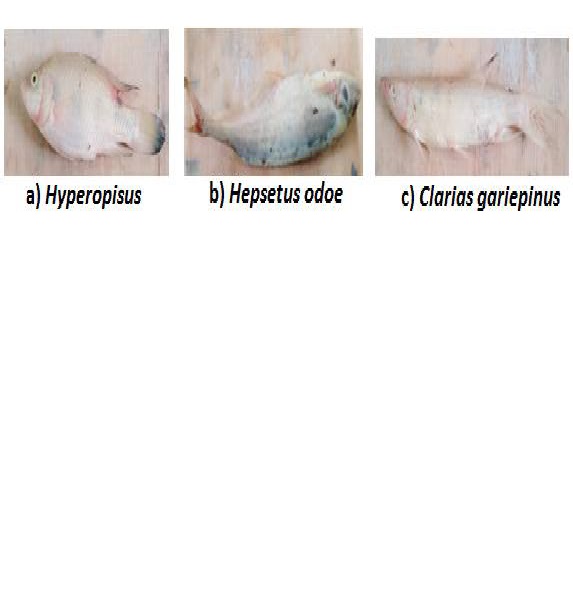
Fish is a vital source of high-quality protein and essential nutrients, but traditional processing methods can significantly influence its lipid composition and nutritional value. This study aims to evaluate the effect of smoking, sun-drying and salting-oven dry on the fatty acid and phospholipid compositions of selected three fish species Hyperopisus bebe, Hepsetus odoe and Clarias gariepinus from the Doma River. The sun-drying process lasted eight days under ambient sunlight (8 a.m. – 5 p.m.), smoking was conducted using hardwood-fired ovens at temperatures above 70 °C for two consecutive days, while salting involved preservation in a 1:4 salt-to-fish ratio prior to oven drying. Processed samples were ground into fine powder and analyzed. Fatty acid methyl esters (FAMEs) and phospholipids were analyzed using gas chromatography. The results revealed notable differences across processing techniques. Smoked samples retained higher levels of PUFA, particularly essential fatty acids such as DHA and EPA. Phosphatidylcholine was the most abundant phospholipid detected, with smoking maintaining higher overall phospholipid integrity compared to drying and sun-drying. Among the fatty acids, smoking yielded the highest PUFA/SFA ratio (32.25 %) indicating better nutritional quality. In conclusion, smoking appears to be the most effective method for preserving health-beneficial lipids in fish from the Doma River.
Downloads
References
Abraha, B., Admassu, H. and Mahmud, A. (2018). Effect of processing methods on nutritional and physico-chemical composition of fish: A review. MOJ Food Processing & Techn., 6(4), 376–382. https://doi.org/10.15406/mojfpt.2018.06.00191
Ahmed, I., Jan, K., Fatma, S. and Dawood, M. A. (2022). Muscle proximate composition of various food fish species and their nutritional significance: A review. Journal of Animal Physiology and Animal Nutrition, 106(3), 690–719. https://doi.org/10.1111/jpn.13711
Akintola, S. L. and Fakoya, K. A. (2017). Small-scale fisheries in the context of traditional post-harvest practice and the quest for food and nutritional security in Nigeria. Agric. & Food Security, 6(1), 34. https://doi.org/10.1186/s40066-017-0110-z
AOAC (2012). Official Methods of Analysis (19th ed., Method 969.33). AOAC International.
Akpomie, T. M., Nmagbo, P. G., Onwuka, J. C. and Augustine, A. U. (2024). Determination and modeling of heavy metal concentrations in River Rutu and Doma Dam in Doma LGA, Nasarawa State. FULafia IAC Book of Proceedings, 1–11. https://doi.org/10.62050/faic2024.bop24.001
Aremu, M. O., Ajine, P. L., Omosebi, M. O., Baba, N. M., Onwuka, J. C., Audu, S. S. and Suhaibu, B. S. (2021). Lipid profiles and health-promoting uses of carrot (Daucus carota L.) and cucumber (Cucumis sativus L.). Int. J. of Sci., 10(7), 22–29. https://doi.org/10.18483/ijSci.2485
Aremu, M. O., Ibrahim, H. and Aremu, S. O. (2016). Lipid composition of black variety of raw and boiled tigernut (Cyperus esculentus L.) grown in North-East Nigeria. Pakistan Journal of Nutrition, 15(5), 427–438. https://doi.org/10.3923/pjn.2016.427.438
Aremu, M. O., Waziri, A. A., Faleye, F. J., Magomya, A. M. and Okpaegbe, U. C. (2019). Lipid profiles of bitter melon (Momordica charantia) fruit and ebony tree (Diospyros mespiliformis) fruit pulp. Bangladesh Journal of Science and Industrial Research, 54(4), 367–374. https://doi.org/10.3329/bjsir.v54i4.44571
Badoni, P., Nazir, I., Aier, M., Maity, P. B., Samanta, S. and Das, A. (2021). Significant role of fish nutrients with special emphasis to essential fatty acid in human nutrition. Int. J. of Current Microbio. and Applied Sci., 10(2), 2034–2046. https://doi.org/10.20546/ijcmas.2021.1002.243
Berger, A., Jones, P. J. H. and Abumweis, S. S. (2014). Plant sterols: Factors affecting their efficacy and safety as functional food ingredients. Lipids in Health and Disease, 3(5).
Birie, S., Mingist, M., Kibret, M., Atlog, T. Y., Geremew, H. and Getnet, B. (2025). Effect of salt concentrations on the proximate composition, microbial load, and sensory attributes of dry‐salted species. Food Science & Nutrition, 13(9). https://doi.org/10.1002/fsn3.70867
Danielli, M. M., Tayz, F. R., Wande, M. B., Rozilaine, A. P. G. de F., Camila de S. P., Pete, B. F., Sandra, M. and Xisto, R. de S. (2019). Fatty acid profiles and cholesterol content of five species of pacu-pevas from the Pantanal region of Mato Grosso, Brazil. Journal of Food Composition and Analysis, 83(2), 103283. https://doi.org/10.1016/j.jfca.2019.103283
Desouky, H. E., Sayed, N. M., Abasubong, K. P. and others. (2025). Nutritional and physiological effects of high-fat diets in finfish: Effects on growth, immunity, lipid metabolism, and intestinal health: A review. Journal of Comparative Physiology B, 195, 415–437. https://doi.org/10.1007/s00360-025-01626-z
Dhanasiri, A. K. S. (2025). Performance, skin and gut health, and fillet quality in Arctic-farmed Atlantic salmon—Effects of increased EPA+DHA and organic zinc source in feed. SSRN. https://doi.org/10.2139/ssrn.5185067
Donghia, D., Baldassari, S., Drava, G., Ailuno, G. and Caviglioli, G. (2025). Insights on natural membrane characterization for the rational design of biomimetic drug delivery systems. Pharmaceutics, 17(7), 841. https://doi.org/10.3390/pharmaceutics17070841
Fakoya, K. A. (2015). Strategic prioritization for sustainable fisheries production in Nigeria. In An Agendum for National Development (pp. 585–608). Center for Human Security, Olusegun Obasanjo Presidential Library.
Ghasemi Fard, S., Wang, F., Sinclair, A. J., Elliott, G. and Turchini, G. M. (2018). How does high DHA fish oil affect health? A systematic review of evidence. Critical Reviews in Food Science and Nutrition, 59(11), 1684–1727. https://doi.org/10.1080/10408398.2018.1425978
Grabon, A., Bankaitis, V. A. and McDermott, M. I. (2019). The interface between phosphatidylinositol transfer protein function and phosphoinositide signaling in higher eukaryotes. Journal of Lipid Research, 60(2), 242–268. https://doi.org/10.1194/jlr.R089730
Hassan, A. M. (2024). Physical, chemical and microbiological changes associated with dry-fish. In A. Ranjan and S. A. Shanmugam (Eds.), Dry Fish: A Global Perspective on Nutr. Security and Econ. Sustainab. (pp. 145–162). Springer. https://doi.org/10.1007/978-3-031-62462-9_8
Hu, Q., Sommerfeld, M., Jarvis, E., Ghirardi, M., Posewitz, M., Seibert, M. and Darzins, A. (2008). Microalgal triacylglycerols as feedstocks for biofuel production: Perspectives and advances. Plant Journal, 54(4), 621–639.
Huang, J. and Sathivel, S. (2020). Purifying salmon oil using adsorption, neutralization, and a combined neutralization and adsorption process. Journal of Food Engineering, 96(1), 51–58.
Islam, R., Islam, M. D. M., Shoeb, M. and Nahar, N. (2018). Fatty acid compositions in marine fish samples of Bangladesh. Journal of Nutrition & Food Sciences, 8(4), 723. https://doi.org/10.4172/2155-9600.1000723
Karadaş, N. F. (2024). Effects of fish on human health and nutrient content. Agro Science Journal of Igdir University, 2(1), 32–38.
Khan, S. K., Dutta, J., Ahmad, I., Rather, M. A., Badroo, I. A. and Taj, S. (2025). Fish protein: A nutritional solution for global food security. In J. K. Sundaray, M. A. Rather, I. Ahmad, & A. Amin (Eds.), Food Security, Nutrition and Sustainability through Aquaculture Technologies (pp. 621–640). Springer. https://doi.org/10.1007/978-3-031-75830-0_27
Kris-Etherton, P. M., Richter, C. K., Bowen, K. J., Skulas-Ray, A. C., Jackson, K. H., Petersen, K. S. and Harris, W. S. (2019). Recent clinical trials shed new light on the cardiovascular benefits of omega-3 fatty acids. Methodist DeBakey Cardiovascular Journal, 15(3), 171–178.
Li, Z.-Z., Xiao, H.-X., Hu, J.-J., Xie, W., Wang, Z.-X., Pan, Y.-P., Li, X.-H. and Yu, X.-F. (2025). The mechanisms and implications of cardiolipin in the regulation of cell death. Cell Biochemistry and Function. https://doi.org/10.1002/cbf.70066
Liu, Q., Ni, X., Chen, C., Xu, J., Pei, E., Yang, A., Xu, M., Wang, X., Fu, S., & Yu, R. (2025). Exploring the impact of dietary EPA/DHA supplementation on lipid metabolism of Tenebrio molitor larvae. Insects, 16(10), 1007. https://doi.org/10.3390/insects16101007
Lutfi, E., Berge, G. M., Bæverfjord, G. (2023). Increasing dietary levels of the n-3 long-chain PUFA, EPA and DHA, improves the growth, welfare, robustness and fillet quality of Atlantic salmon in sea cages. British J. of Nutr., 129(1), 10–28. https://doi.org/10.1017/S0007114522000642
Mohanty, B. P. and Singh, S. D. (2018). Fish and human nutrition. In Aquaculture in India (pp. 561–581). Narendra Publishing House.
Nesa, J., Dey, A., Faisal, M. (2025). Nutritional variation in muscle type, body segments, and cooking effects of four commercially important marine fish (Carangoides malabaricus, Scomberoides commersonnianus, Dussumieria acuta, and Sardinella fimbriata) of the Bay of Bengal, Bangladesh. Food Science and Technology International. Advance online publication. https://doi.org/10.1177/10820132251343355
Olgunoglu, M. P., & Olgunoglu, I. A. (2025). Assessment of micro–macro elements and fatty acid profiles in Turkish salmon fillets during traditional hot smoking: Implications for human health risks. Quality Assurance and Safety of Crops & Foods, 17(2), 200–212.
Pal, M., Bekele, A., Rebuma, T. and Ragasa, T. (2025). Contribution of fisheries to food security in Ethiopia: A comprehensive review. AUCTORES Journal of Nutrition and Food Processing. https://doi.org/10.31579/2637-8914/297
Palabiyik, A. A. and Palabiyik, E. (2025). Effects of omega-3 fatty acids (n-3 PUFAs) on cardiovascular and muscular health across various populations: A review of supplementation benefits. Nutrire, 50(1), 73. https://doi.org/10.1186/s41110-025-00381-z
Pegu, A. and Baruah, C. (2025). Amino acid and fatty acid profile of five small indigenous fish species (SIS) from Assam, India. Journal of Applied and Natural Science, 17(2), 582–591. https://doi.org/10.31018/jans.v17i2.6255
Pegu, A., Kalita, R., Das, P. and Baruah, C. (2023). Nutritional composition of small indigenous species of fishes of Northeast India: A systematic review. Journal of Applied and Natural Science, 15(2), 649–662. https://doi.org/10.31018/jans.v15i2.4490
Rasul, M. G., Yuan, C. and Shah, A. K. M. (2021). Chemical composition and nutritional value of dried fish in Bangladesh. Egyptian Journal of Aquatic Biology and Fisheries, 25(4), 379–399. https://doi.org/10.21608/ejabf.2021.189666
Reshi, Q. M., Ahmad, I., Nabi, N., Ahmed, I. and Sidiq, M. (2025). Global food insecurity: Role of fishes to compensate food insecurity and nutritional demand. In J. K. Sundaray, M. A. Rather, I. Ahmad, & A. Amin (Eds.), Food Security, Nutrition and Sustainability through Aquaculture Technologies (pp. 101–120). Springer. https://doi.org/10.1007/978-3-031-75830-0_5
Singh, R. D., Arambam, K., Singh, A. M. and Singh, S. K. (2025). Health and nutritional benefits of fish as human food. In J. K. Sundaray, M. A. Rather, I. Ahmad, & A. Amin (Eds.), Food Security, Nutrition and Sustainability through Aquaculture Technologies (pp. 41–60). Springer. https://doi.org/10.1007/978-3-031-75830-0_3
Tahiluddin, A. B. and Kadak, A. E. (2022). Traditional fish processing techniques applied in the Philippines and Turkey. Menba Kastamonu University Faculty of Fisheries Journal, 8(1), 50–58.
Tan, K., Huang, L. and Luo, C. (2025). Effectiveness of low-temperature storage on lipid nutritional quality of fish: A meta-analysis. Aquaculture International, 33, 473–489. https://doi.org/10.1007/s10499-025-02131-4
World Health Organization (2022). Obesity and overweight. https://www.who.int/news-room/fact-sheets/detail/obesity-and-overweight
Yashim, E. Y., Dambo, A. and Adole, A. (2025). Effect of some processing methods on the proximate composition of some frozen marine fishes. Journal of Science Research and Reviews, 2(1), 127–132. https://doi.org/10.70882/josrar.2025.v2i1.54
Zeisel, S. H., Char, D. and Sheard, N. F. (1986). Choline, phosphatidylcholine and sphingomyelin in human and bovine milk and infant formulas. Journal of Nutrition, 116(1), 50–58. https://doi.org/10.1093/jn/116.1.50
Zhang, H., Zhao, H., Zhang, Y., Shen, Y., Jin, J., Jin, Q. and Wang, X. (2018). Characterization of positional distribution of fatty acids and triacylglycerol molecular compositions of marine fish oils rich in omega-3 polyunsaturated fatty acids. BioMed Research International. https://doi.org/10.1155/2018/4562742
Downloads
Published
Issue
Section
How to Cite