Extraction, Prototype Design for the Process Automation of Pure Amorphous Silica from Rice Milling Waste (Husk)
DOI:
https://doi.org/10.62050/ljsir2026.v4n1.811الكلمات المفتاحية:
Automation، prototype، purity، pozalana، rice husk، silicaالملخص
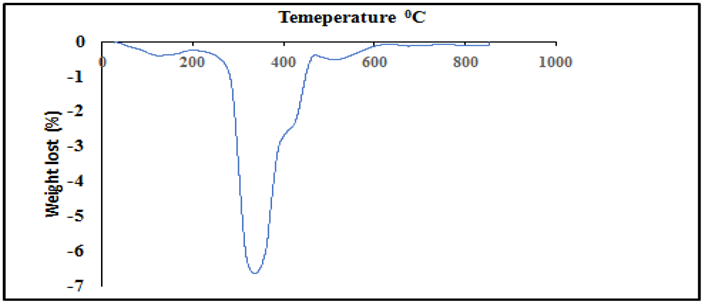
The global shift to sustainable materials has intensified research on agricultural waste materials like rice husk as they can produce high-purity silica. The process of silica extraction through traditional hot leaching methods requires excessive energy and creates environmental pollution. The research project aims to investigate how leaching processes affect material composition. The researchers assessed silica through multiple methods which included Scanning Electron microscopy-energy dispersive spectroscopy (SEM-EDS) X-ray fluorescence (XRF) X-ray Diffraction (XRD) and Thermogravimetric Analysis-Differential Thermal Analysis (TGA-DTA). The treated silica reached 97% purity while maintaining a dense structure and minimal impurities and it demonstrated thermal stability that extended beyond 600 °C. The H₂SO₄-treated silica achieved 96% purity but its thermal stability decreased to 680 °C while HNO₃-treated silica with 95% purity exhibited carbon content of 3.05% and reduced thermal stability because of incomplete organic matter removal. XRD confirmed that all the samples exist as amorphous materials. The SEM-EDS analysis showed that HCL treatment resulted in the most effective impurity reduction because this sample showed the best compact morphology. The (TGA-DTA) analysis demonstrated weight-loss at various stages which occurred during moisture loss and organic matter decomposition while the material maintained stable thermal properties at high temperatures.
التنزيلات
المراجع
J. Y. Park, Y. M. Gu, J. Chun, B. I. Sang, and J. H. Lee, “Pilot-scale continuous biogenic silica extraction from rice husk by one-pot alkali hydrothermal treatment and ball milling,” Chem. Biol. Technol. Agric., vol. 10, no. 1, pp. 1–7, 2023, doi: 10.1186/s40538-023-00479-4.
S. O. Mezan, S. M. Al Absi, A. H. Jabbar, M. S. Roslan, and M. A. Agam, “Synthesis and characterization of enhanced silica nanoparticle (SiO2) prepared from rice husk ash immobilized of 3-(chloropropyl) triethoxysilanea,” Mater. Today Proc., vol. 42, pp. 2464–2468, 2021, doi: 10.1016/j.matpr.2020.12.564.
Z. A. S. A. Salim, A. Hassan, and H. Ismail, “The effect of high purity rice husk silica synthesised using solvent-thermal extraction method on the properties of natural rubber compounds,” BioResources, vol. 13, no. 3, pp. 6936–6951, 2019, doi: 10.15376/biores.13.3.6936-6951.
T. F. Onoja, D.A., Ahemen, , Iorfa, “Synthesis and Characterization of Cellulose Based Nanofibres from Rice Husk,” J. Appl. Phys., vol. 11, no. 2, pp. 80–87, 2019, doi: 10.9790/4861-1102038087.
A. Luthfiah, Y. Deawati, M. Lutfi Firdaus, I. Rahayu, and D. R. Eddy, “Silica from natural sources: A review on the extraction and potential application as a supporting photocatalytic material for antibacterial activity,” Sci. Technol. Indones., vol. 6, no. 3, pp. 144–155, 2021, doi: 10.26554/sti.2021.6.3.144-155.
J. Jones Ajali Chukwunonso, “Synthesis of Pure Desiccant Using Rice Husk from Nigeria,” Int. J. Sci. Res., vol. 12, no. 7, pp. 751–757, 2023, doi: 10.21275/mr23709072023.
S. S. Hossain, L. Mathur, and P. K. Roy, “Rice husk/rice husk ash as an alternative source of silica in ceramics: A review,” J. Asian Ceram. Soc., vol. 6, no. 4, pp. 299–313, Oct. 2018, doi: 10.1080/21870764.2018.1539210.
W. K. Setiawan and K. Y. Chiang, “Eco-friendly rice husk pre-treatment for preparing biogenic silica: Gluconic acid and citric acid comparative study,” Chemosphere, vol. 279, p. 130541, 2021, doi: 10.1016/j.chemosphere.2021.130541.
S. Steven, E. Restiawaty, P. Pasymi, and Y. Bindar, “An appropriate acid leaching sequence in rice husk ash extraction to enhance the produced green silica quality for sustainable industrial silica gel purpose,” vol. 122, 2021.
P. U. Nzereogu, A. D. Omah, F. I. Ezema, E. I. Iwuoha, and A. C. Nwanya, “Silica extraction from rice husk: Comprehensive review and applications,” Hybrid Adv., vol. 4, no. August, p. 100111, 2023, doi: 10.1016/j.hybadv.2023.100111.
W. Guo, G. Li, Y. Zheng, and K. Li, “Nano-silica extracted from rice husk and its application in acetic acid steam reforming,” RSC Adv., vol. 11, no. 55, pp. 34915–34922, 2021, doi: 10.1039/d1ra05255a.
S. A. Ajeel, K. A. Sukkar, and N. K. Zedin, “Evaluation of acid leaching process and calcination temperature on the silica extraction efficiency from the sustainable sources,” in Journal of Physics: Conference Series, 2021, vol. 1773, no. 1. doi: 10.1088/1742-6596/1773/1/012014.
Y. M. Peralta, R. Molina, and S. Moreno, “Chemical and structural properties of silica obtained from rice husk and its potential as a catalytic support,” J. Environ. Chem. Eng., vol. 12, no. 2, 2024, doi: 10.1016/j.jece.2024.112370.
S. Kamari, “Extraction of highly pure silica from rice husk as an agricultural by-product and its application in the production of magnetic mesoporous silica MCM – 41,” Biomass Convers. Biorefinery, 2020.
S. M. Z. Noratiqah, A. A. Shahrul, and H. J. Noorina, “Extraction of Silica from Rice Husk Via Acid Leaching Treatment,” in The European Proceedings of Social & Behavioural Sciences, 2019, pp. 176–183.
N. Setyawan, Hoerudin, and S. Yuliani, “Synthesis of silica from rice husk by sol-gel method,” in IOP Conference Series: Earth and Environmental Science, 2021, vol. 733, no. 1, p. 733. doi: 10.1088/1755-1315/733/1/012149.
A. C. and P. Purwanto, “Sustainable Industrial Approaches : Utilizing Organic Acid for Purity Enhancement in Green Silica Production †,” in 8th Mechanical Engineering, Science and Technology International Conference, Padang Besar, Perlis, Malaysia, 2025.
S. Azat, Z. Sartova, K. Bekseitova, and K. Askaruly, “Extraction of high-purity silica from rice husk via hydrochloric acid leaching treatment,” Turkish J. Chem., vol. 43, no. 5, pp. 1258–1269, 2019, doi: 10.3906/kim-1903-53.
A. M. Hamza, “Physical, Optical and Thermal Properties Of Erbium-Doped Borotellurite Silicate Glass System Incorporated with Silver Oxide,” Universiti Putra Malaysia, 2019.
U. A. Sa’ad, “Structural, Elastic and Optical Properties Of Rice Husk Silicate Borotellurite Glass System Doped with Micro and Nanoparticles of Erbium Oxide,” Universiti Putra Malaysia, 2018.
I. G. Geidam et al., “Oxide ion polarizabilities and gamma radiation shielding features of TeO 2 – B 2 O 3 – SiO 2 glasses containing Bi 2 O 3 using Phy-X / PSD software,” vol. 31, no. April, pp. 1–9, 2022.
S. abualnoun Ajeel, K. A. Sukkar, and N. K. Zedin, “Extraction of high purity amorphous silica from rice husk by chemical process,” in 3rd International Conference on Sustainable Engineering Techniques (ICSET 2020), 2020, p. 881. doi: 10.1088/1757-899X/881/1/012096.
Y. Zou and T. Yang, Rice Husk , Rice Husk Ash and Their. Elsevier Inc., 2019. doi: 10.1016/B978-0-12-812828-2.00009-3.
K. Askaruly, “Extraction of high-purity silica from rice husk via hydrochloric acid leaching treatment,” vol. 43, no. 5, 2019, doi: 10.3906/kim-1903-53.
A. S. Aliyu et al., “Synthesis and characterisation of rice husk and palm fruit bunch silica: compositional, structural, and thermal analyses,” Biomass Convers. Biorefinery, 2024, doi: 10.1007/s13399-024-05525-1.
M. N. Yeasmin, M. Sultana, A. Siddika, S. Tabassum, S. M. Ullah, and M. S. Bashar, “Structural, Optical, and Morphological Characterization of Silica Nanoparticles Prepared by Sol-Gel Process,” J. Turkish Chem. Soc. Sect. A Chem., vol. 9, no. 4, pp. 1323–1334, 2022, doi: 10.18596/jotcsa.1071086.
G. A. Habte, T. A. Bullo, and Y. Ahmed, “Statistical optimization characterizations and Eco- friendly synthesis of silica from sugarcane bagasse,” Sci. Rep., vol. 15, no. 1, pp. 1–17, 2025, doi: 10.1038/s41598-025-89366-6.
M. T. Islam, M. F. Hossen, M. A. Asraf, M. Kudrat-E-Zahan, and C. M. Zakaria, “Production and Characterization of Silica from Rice Husk: An Updated Review,” Asian J. Chem. Sci., vol. 14, no. 2, pp. 83–96, Mar. 2024, doi: 10.9734/ajocs/2024/v14i2296.
M. J. Kaleli, P. K. Kamweru, J. M. Gichumbi, and F. G. Ndiritu, “Characterization of rice husk ash prepared by open air burning and furnace calcination,” J. Chem. Eng. Mater. Sci., vol. 11, no. 2, pp. 24–30, 2020, doi: 10.5897/jcems2020.0348.
A. Surowiak and M. Wahman, “Thermal–Mechanical Delamination for Recovery of Tempered Glass from Photovoltaic Panels,” Energies, vol. 17, no. 17, p. 4444, 2024, doi: 10.3390/en17174444.
D. Dorairaj, N. Govender, S. Zakaria, and R. Wickneswari, “Green synthesis and characterization of UKMRC-8 rice husk-derived mesoporous silica nanoparticle for agricultural application,” Sci. Rep., vol. 12, no. 1, pp. 1–11, 2022, doi: 10.1038/s41598-022-24484-z.
G. M. S. I. and M. M. I. Nadira Islam Nila1, Md Tahajul Islam Piyes, “CEMENTITIOUS PROPERTIES OF RICE HUSK ASH (RHA) AND EXTRACTED SILICA POWDER FROM RHA,” in 7th International Conference on Advances in Civil Engineering (ICACE2024), 2025, no. December 2024.
T. D. Tran, V. Le, and N. T. Nguyen, “Cellulose nanocrystals extracted from rice husk using the formic / peroxyformic acid process : isolation and structural characterization †,” pp. 2048–2060, 2024, doi: 10.1039/d3ra06724f.
H. W. Jeong, K. T. Park, S. M. Oh, S. E. Shim, and Y. Qian, “Sustainable Reinforcement of Silicone Rubber: Comparative Analysis of Biosilica from Rice Husk and Conventional Silica,” Polymers (Basel)., vol. 17, no. 3, 2025, doi: 10.3390/polym17030406.
M. Popova et al., “Mesoporous Silica with an Alveolar Construction Obtained by Eco-Friendly Treatment of Rice Husks,” Molecules, vol. 29, no. 15, 2024, doi: 10.3390/molecules29153540.
J. A. Santana Costa and C. M. Paranhos, “Systematic evaluation of amorphous silica production from rice husk ashes,” J. Clean. Prod., vol. 192, pp. 688–697, 2018, doi: 10.1016/j.jclepro.2018.05.028.
Y. Zhou, Y. Hu, Z. Tan, and T. Zhou, “Cellulose extraction from rice straw waste for biodegradable ethyl cellulose films preparation using green chemical technology,” J. Clean. Prod., vol. 439, p. 140839, Feb. 2024, doi: 10.1016/j.jclepro.2024.140839.
P. Jagnade and N. Panwar, “Kinetic and Thermogravimetric Analysis of Rice Husk and its Derived Biochar,” vol. 13, no. 2, 2024, [Online]. Available: http://nanobioletters.com/wp-content/uploads/2024/07/LIANBS132.086.pdf
التنزيلات
منشور
إصدار
القسم
الرخصة
الحقوق الفكرية (c) 2026 Abdulkarim Muhammad Hamza, Ahmed Abdullahi Sule, Umar Sa'ad Aliyu, Atanyi Yusuf, Sani Muhammad, Mustapha Adejo Muhammad , Adejo Andrew Ojonugwa, Hassan Shaibatu Ibrahim (Author)

هذا العمل مرخص بموجب Creative Commons Attribution-ShareAlike 4.0 International License.
كيفية الاقتباس