
EXTRACTION, PHYSICOCHEMICAL, AND STRUCTURAL CHARACTERIZATION OF NANOCELLULOSE FROM PINEAPPLE (Ananas comosus) PEELS WITHPOTENTIAL FOR SUSTAINABLE PAPER APPLICATIONS
Keywords:
Nanocellulose , agrowaste , Sustainable paper production , valorization , CrystallinityAbstract
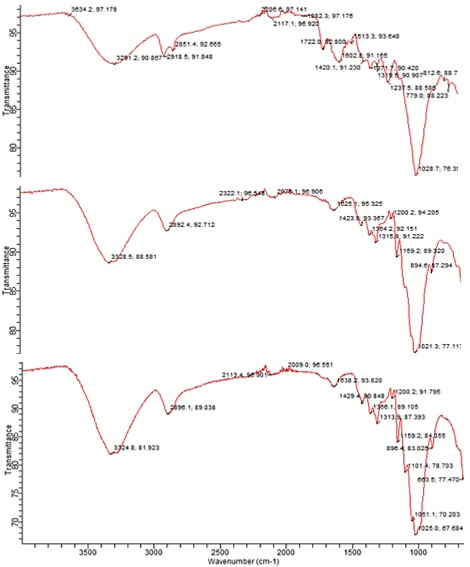
The heavy reliance on wood-based pulp for paper production accelerates significant loss of biodiversity, deforestation, and increased greenhouse gas emissions, highlighting the urgent need for sustainable non-wood alternatives. In this study, nanocellulose was extracted from pineapple (Ananas comosus) peels, an abundant and underutilized agro-industrial waste, and comprehensively characterized to evaluate its physicochemical and structural properties. Cellulose was isolated from powdered pineapple peels through sequential alkaline delignification and bleaching, followed by acid hydrolysis to obtain nanocellulose. The resulting nanocellulose was characterized by Fourier-Transform Infrared Spectroscopy (FTIR), Scanning Electron Microscopy (SEM), and X-ray Diffraction (XRD), while key hydration-related parameters were measured. A cellulose-based nanocellulose yield of 7.5 % was obtained, corresponding to a biomass-based yield of 12.9 %, with a bulk density of 0.55 g/mL and a water retention capacity of 0.25 g/g. FTIR spectra confirmed effective removal of lignin and hemicellulose, SEM revealed nanoscale fibrillar morphology, and XRD showed an increase in crystallinity index from 67.09 % (bleached cellulose) to 69.40 % in nanocellulose, indicating an enhanced structural order. Overall, the findings demonstrate that pineapple peel-derived nanocellulose exhibits desirable physicochemical and morphological characteristics suitable for sustainable paper applications. The observed structural features and hydration behavior suggest that pineapple peel-derived nanocellulose has characteristics that may be favorable for cellulose-based material development, supporting its potential use in sustainable paper-related applications.
Published
How to Cite
Issue
Section
How to Cite
Similar Articles
- S. A. SIRAJO, E. H. Kwon-Ndung, H. A. Kana, APPLICATIONS OF NANOBREEDING FOR THE ENHANCEMENT OF FOOD SECURITY , FULafia Journal of Science and Technology : Vol. 8 No. 1 (March, 2024): Fulafia Journal of Science and Technology (FJST)
- Makut M. D., Ogundiya O. L., PRODUCTION OF BIOETHANOL USING PAPER WASTES AS SUBSTRATES , FULafia Journal of Science and Technology : Vol. 3 No. 1 (2017): Fulafia Journal of Science and Technology (FJST)
- Emmanuel H. Kwon-Ndung, Terna Paul, Ogiri A, Dakyes U, Fadayomi V. O. , Sani R. O. , INNOVATIVE DEVELOPMENT AND PERFORMANCE ASSESSMENT OF AN ECO-FRIENDLY, COST-EFFECTIVE STARTER FOR SUSTAINABLE CHARCOALBRIQUETTE PRODUCTION IN NIGERIA , FULafia Journal of Science and Technology : Vol. 10 No. 2 (2026): Fulafia Journal of Science and Technology (FJST)
- Ojobor S. A., Obiazi C. C., RESPONSE AND PERFORMANCE OF MAIZE (Zea mays) TO SOIL AMENDMENT IN ASABA, DELTA STATE, NIGERIA , FULafia Journal of Science and Technology : Vol. 5 No. 1 (2019): Fulafia Journal of Science and Technology (FJST)
- Ari M. M., Gambo D., Alu S. E., Edwin E. E., Aminu R. A., Isa J. M., Yanduma M., OUTCOME OF CALCIUM AND PHOSPHOROUS MINERAL SOURCES ON PERFORMANCE, CARCASS AND BONES CHARACTERISTICS OF BROILERS , FULafia Journal of Science and Technology : Vol. 2 No. 2 (2016): Fulafia Journal of Science and Technology (FJST)
- Godwin Ojemeri, Muhammed Murtala Hamza, Agnes Marian Ochiba, Isaac Obiajulu Onwubuya, Adeniran Kolade Ademuwagun, Abubakar Muhammad Tsafe, Ibrahim Ahmad Sifawa, THERMAL RADIATION EFFECT ON A BOUYANCY-INDUCED COUETTE FLOW DUE TO NEWTONIAN HEATING IN AN UPSTANDING CHANNEL , FULafia Journal of Science and Technology : Vol. 9 No. 2 (2025): Fulafia Journal of Science and Technology (FJST) (In Progress)
- Ilusanya O. A. F., Bankole S. A., Ohue L. A., Ogunbanjo O. O., SOIL PHYSICO-CHEMICAL PROPERTIES AND MICROFLORA AS INFLUENCED BY PARAQUAT APPLICATIONS , FULafia Journal of Science and Technology : Vol. 2 No. 1 (2016): Fulafia Journal of Science and Technology (FJST)
- Samuel Oluyemi Owoeye, Folasade O. Durodola, Adetoro Taofeek, Babatunde Bisiriyu, Mahrufdeen Adegbenro, REAL-TIME IDENTIFICATION OF MAIZE PLANT AND WEEDS USING MACHINE LEARNING MODEL IMPLEMENTED VIA YOLO v5 , FULafia Journal of Science and Technology : Vol. 8 No. 2 (September, 2024): Fulafia Journal of Science and Technology (FJST)
- Samuel Emmanuel Alu, Musa Ibrahim Suleiman, Amos Philip Thani, Irene Onyeniyoma Oduh, GROWTH RESPONSE OF RABBITS TO RUMEN LIQUOR–FERMENTED SUGAR BY-PRODUCT MEAL DIETS WITH MULTIGRAIN ENZYME SUPPLEMENTATION , FULafia Journal of Science and Technology : Vol. 10 No. 1 (2026): Fulafia Journal of Science and Technology (FJST)
- Sule S. O., Sotolu A. O., Okunsebor S. A., Sanusi S. O., AQUACULTURE INSURANCE IN SUSTAINABLE FISH PRODUCTION: CASE STUDY OF NIGERIA AGRICULTURAL INSURANCE CORPORATION, OYO STATE , FULafia Journal of Science and Technology : Vol. 5 No. 2 (2019): Fulafia Journal of Science and Technology (FJST)
You may also start an advanced similarity search for this article.