
PHYTOCHEMICAL COMPOSITION AND FUNCTIONAL GROUP PROFILE OF Millettia aboensis EXTRACTS TO ELUCIDATE THEIR BIOCHEMICAL BASIS FOR LARVICIDALACTIVITY AGAINST Anopheles AND Culex MOSQUITOES

المؤلفون

  • Simon Odey
    Federal University of Lafia, Nigeria
    https://orcid.org/0000-0003-4492-9906
  • Victoria Pam
    Federal University of Lafia, Nigeria
  • James Maikenti
    Federal University of Lafia, Nigeria
  • Mohammed Ashigar
    Federal University of Lafia, Nigeria
  • Akwashiki Ombugadu
    Federal University of Lafia, Nigeria
  • Hussein Ahmed
    Federal University of Lafia, Nigeria
  • M. R. Abubakar
    College of Education, Akwanga, Nasarawa State, Nigeria
  • Isaac Joshua
    Federal University of Lafia, Nigeria

الكلمات المفتاحية:

Array

الملخص

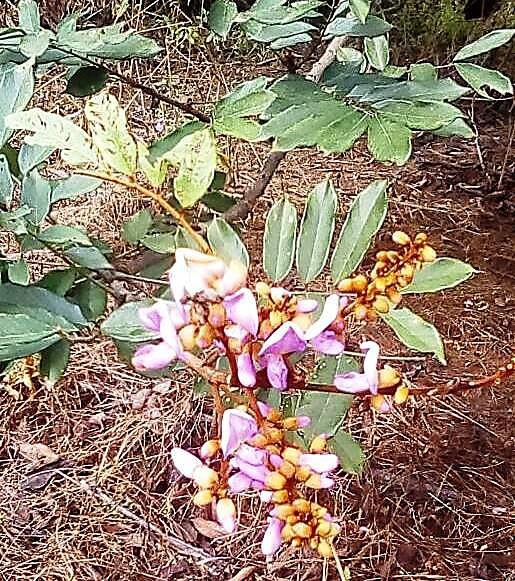
Mosquitoes are major vectors of life-threatening diseases and their control is increasingly challenged by the emergence of insecticide resistance. Millettia aboensis has demonstrated promising larvicidal activity against mosquito species. This study evaluated the phytochemical composition and functional group profile of M. aboensis extracts to elucidate the biochemical basis of their larvicidal activity against Anopheles and Culex mosquitoes. Plant materials collected from Lafia metropolis were extracted by maceration and subjected to qualitative and quantitative phytochemical analyses, alongside Fourier Transform Infrared (FTIR) spectroscopy. Qualitative screening revealed the presence of alkaloids, flavonoids, saponins, steroids, terpenoids, cardiac glycosides, phenols, and anthraquinones, with the leaf extracts showing greater phytochemical diversity and abundance of active constituents. Quantitative analysis indicated that saponins (18.78 mg/100 g) and steroids (16.65 mg/100 g) were predominantin the leaf extract. The FTIR spectroscopy further validated these findings by identifying characteristic absorption bands corresponding to hydroxyl (–OH), carbonyl (C=O), amine (–NH), ether (C–O–C), and chloro (C–Cl) groups, which are associated with alcohols, phenols, carboxylic acids, and alkaloids. The presence of these functional groups suggests multiple larvicidal mechanisms, including oxidative stress induction, neurotoxic interference, enzymatic inhibition, and cuticular disruption. The integrated phytochemical and FTIR analyses provide molecular evidence supporting the larvicidal potency of M. aboensis, highlighting its potential as a sustainable botanical alternative to synthetic larvicides. The findings establish M. aboensis as a promising bio-resource for the development of eco-friendly vector control agents and contribute to the growing body of knowledge on plant-based mosquito management strategies.
السير الشخصية للمؤلفين

Simon Odey

Department of Zoology

Victoria Pam

Department of Zoology

James Maikenti

Department of Zoology

Mohammed Ashigar

Department of Zoology

Akwashiki Ombugadu

Department of Zoology

Hussein Ahmed

Department of Zoology

M. R. Abubakar

Department of Biology Education

Isaac Joshua

Department of Zoology

Dimensions

Abbott, W. S. (1925). A method of computing the effectiveness of an insecticide. Journal of Economic Entomology, 18(2), 265-267.

Ajima, M. N., Ezeonu, I. M. and Ilo, C. E. (2021). Phytochemical and biological characterization of Millettia species in tropical Africa. Journal of Applied Plant Sciences, 19(2), 113–124.

Bagavan, A., Rahuman, A. A., Kamaraj, C. and Geetha, K. (2008). Larvicidal activity of saponin from Achyranthesaspera against Aedes aegypti and Culex quinquefasciatus (Diptera: Culicidae). Parasitology Research, 103(1), 223-229.

Bello, A. Y., Ibrahim, M. T. and Musa, L. (2024). Phytochemical diversity and ecological adaptations in Nigerian Millettia species. African J. of Botany and Phytochemistry, 42(1), 67–79.

Bhuvaneswari, A., Shriram, A. N., Raju, K. H. K. and Kumar, A. (2023). Mosquitoes, lymphatic filariasis, and public health: A systematic review of Anopheles and Aedes surveillance strategies. Pathogens, 12(12), 1406.

Chen, J. and Lou, W. (2025). Millettia speciosa and by-products: A comprehensive review of chemical composition, bioactivities, safety, and industrial applications. Foods, 14(12), 2035.

Coetzee, M. (2020). Key to the females of Afrotropical Anopheles mosquitoes (Diptera: Culicidae). Malaria Journal, 19(1), 70.

Desta, K. T. and Abd El-Aty, A. M. (2023). Millettiaisoflavonoids: a comprehensive review of structural diversity, extraction, isolation, and pharmacological properties. Phytochemistry Reviews, 22(1), 275-308.

Edeoga, H. O., Okwu, D. E. and Mbaebie, B. O. (2005). Phytochemical constituents of some Nigerian medicinal plants. African Journal of Biotechnology, 4(7), 685-688.

Edward, K. C., Chijioke, D. U. and Friday, C. G. (2023). Phytochemical screening and antibacterial activities of ethanolic and aqueous leaf extracts of Alchorneacordifolia and Sidaacuta on organisms isolated from meat. Nig. J. of Microbiol., 37(1), 6558-6569.

Elumalai, K., Dhanasekaran, S. and Krishnappa, K. (2021). Phytochemical-mediated oxidative stress induction and larvicidal efficacy of selected plant extracts against Anopheles and Culex species. Environmental Science and Pollution Research, 28(12), 15132-15144.

Finney, D. J. (1971). Probit Analysis 3rd ed. Cambridge Univ. Press. London, UK, 333.

Ganesan, P., Samuel, R., Mutheeswaran, S., Pandikumar, P., Reegan, A. D., Aremu, A. O. and Ignacimuthu, S. (2023). Phytocompounds for mosquito larvicidal activity and their modes of action: A review. South African Journal of Botany, 152, 19-49.

George, N. S., David, S. C., Nabiryo, M., Sunday, B. A., Olanrewaju, O. F., Yangaza, Y. and Shomuyiwa, D. O. (2023). Addressing neglected tropical diseases in Africa: A health equity perspective. Global Health Research and Policy, 8(1), 30.

Govindarajan, M., Pavela, R. and Benelli, G. (2022). Plant-derived compounds for mosquito control: Recent advances and challenges. Industrial Crops & Products, 188, 115625.

Handa, S. S., Khanuja, S. P. S., Longo, G. and Rakesh, D. D. (2008). Extraction Technologies for Medicinal and Aromatic Plants (2nd ed.). ICS-UNIDO. Harborne, A. J. (1998). Phytochemical Methods: A Guide to Modern Techniques of Plant Analysis. Springer Science & Business Media.

Ibrahim, A. (2009). Preparation and evaluation of plant extracts in vector control. African Journal of Applied Zoology and Environmental Biology, 11(1), 17–24.

Igoli, J. O., Ogaji, O. G., Tor-Anyim, T. A. and Igoli, N. P. (2005). Traditional medicine practice among the Igede people of Nigeria. Journal of Ethnobiology and Ethnomedicine, 1(1), 6.

Isman, M. B. (2020). Botanical insecticides in the twenty-first century—fulfilling their promise? Annual Review of Entomology, 65(1), 233-249.

Joshua, I. A. (2025). Larvicidal activity of the oil extracts of Sida acuta and Cymbopogon citratus against Aedes aegypti larvae. Master’s Dissertation (pp. 1 – 143); submitted to the College of Postgraduate Studies, Federal University of Lafia, Nasarawa State.

Joshua, I. A., Ombugadu, A., Ashigar, M. A., Maikenti, J. I., Ahmed, H. O., Polycarp, I. A., Otakpa, E. O., Nwokocha, C. E., Judah, S. J. and Pam, V. A. (2025). Phytochemical composition and larvicidal activity of Sida acuta oil extract against Aedes aegypti larvae. Bioscience Biotechnology Research Communications, 18(3), 2321-4007.

Kent, R. (2006). Identification of adult mosquitoes in Africa. J. of Vector Ecology, 31(2), 213–218.

Livinus, N. H., Tamai, J. S., Ombugadu, A. and Mafuyai, M. J. (2022). Species composition and gonotrophic stages of indoor resting mosquitoes in lecture halls of University of Jos, Nigeria. Transactions on Science and Technology, 9(3), 159-170.

Mane, N. B. and Khilare, C. J. (2021). Phytochemical analysis and study of functional groups by FTIR analysis of Withaniasomnifera L Dunal. Journal of Scientific Research and Reports, 65(6).

Nandagopal, A. and Raju, N. A. (2025). Phytochemical analysis and evaluation of the anti-inflammatory and antioxidant activity of diverse extracts of Millettiapeguensis leaves. Discover Chemistry, 2(1), 213.

National Population Commission (2006). Population census of the Federal Republic of Nigeria. Census Report: National Population Commission, Abuja.

Ngegba, P. M., Cui, G., Khalid, M. Z., & Zhong, G. (2022). Use of botanical pesticides in agriculture as an alternative to synthetic pesticides. Agriculture, 12(5), 600.

Obadoni, B. O. and Ochuko, P. O. (2002). Phytochemical studies and comparative efficacy of the crude extracts of some haemostatic plants in Edo and Delta States of Nigeria. Global Journal of Pure and Applied Sciences, 8(2), 203-208.

Olaniyi, A. A., Olajuyigbe, S. O. and Olaniyi, M. B. (2024). Morphological variations in Tetrapleuratetraptera Taub. (Fabaceae) fruits and seed traits from lowland rainforest zones of Nigeria: A keystone non timber forest tree species in the tropics. Journal of Forest and Environmental Science, 40(2), 111-117.

Onwudiwe, D. C., Ajima, M. N. and Ilo, C. I. (2023). Phytochemical and insecticidal activities of Millettia aboensis against mosquito vectors. Nigerian Journal of Entomology, 40(2), 92–105.

Pavela, R. and Benelli, G. (2016). Essential oils as ecofriendly biopesticides? Challenges and constraints. Trends in plant science, 21(12), 1000-1007.

Rajkumar, S. and Jebanesan, A. (2019). Bioactivity of selected plant extracts against mosquito larvae. Asian Pacific Journal of Tropical Biomedicine, 9(3), 145–151.

Ranson, H. and Lissenden, N. (2016). Insecticide resistance in African Anopheles mosquitoes: a worsening situation that needs urgent action to maintain malaria control. Trends in Parasitology, 32(3), 187-196.

Rattan, R. S. (2019). Mechanism of action of insecticidal secondary metabolites of plant origin. Crop Protection, 117, 83–91.

Şengül Demirak, M. Ş. and Canpolat, E. (2022). Plant-based bioinsecticides for mosquito control: Impact on insecticide resistance and disease transmission. Insects, 13(2), 162.

Senthilkumar, R. P., Bhuvaneshwari, V., Malayaman, V., Ranjithkumar, R. and Sathiyavimal, S. (2018). Phytochemical screening of aqueous leaf extract of Sidaacuta burm. F. and its antibacterial activity. J. of Emerging Techn. and Innovative Res., 5(8), 474-478.

Shaalan, E. A. S., Canyon, D., Younes, M. W. F., Abdel-Wahab, H., & Mansour, A. H. (2005). A review of botanical phytochemicals with mosquitocidal potential. Environment International, 31(8), 1149-1166.

Shaheen, G., Ashfaq, A., Shamim, T., Asif, H. M., Ali, A., Rehman, S. U. and Sumreen, L. (2022). Antioxidant, antimicrobial, phytochemical and FTIR analysis of Peganumharmala (Fruit) ethanolic extract from Cholistan Desert, Pakistan. Dose-Response, 20(3), 15593258221126832.

Siddiqui, J. A., Fan, R., Naz, H., Bamisile, B. S., Hafeez, M., Ghani, M. I., ... and Chen, X. (2023). Insights into insecticide-resistance mechanisms in invasive species: Challenges and control strategies. Frontiers in Physiology, 13, 1112278.

Silverstein, R. M. and Bassler, G. C. (1962). Spectrometric identification of organic compounds. Journal of Chemical Education, 39(11), 546.

Singh, P. K., Singh, J., Medhi, T. and Kumar, A. (2022). Phytochemical screening, quantification, FT-IR analysis, and in silico characterization of potential bio-active compounds identified in HR-LC/MS analysis of the polyherbal formulation from Northeast India. ACS omega, 7(37), 33067-33078.

Singh, H., Akhtar, N. and Gupta, S. K. (2024). Biology of mosquitoes. In: Mosquitoes: Biology, Pathogenicity and Management (pp. 141-163). Singapore: Springer Nature Singapore.

Sofowora A. (1993). Medicinal Plants and Traditional Medicinal in Africa. (2nd Ed.) Sunshine House, Ibadan, Nigeria. In: Screening Plants for Bioactive Agents (pp. 134-156). Spectrum Books Ltd.

Trease, G. E. and Evans, W. C. (2002). Pharmacognosy. Analytical Chemistry, 34, 1314-1326.

Ullah, H., Iqbal, T., Al-Mutairi, K. A., Shahjeer, K., Ullah, R., Ahmed, S. and Khater, H. F. (2022). Botanical insecticides are a non-toxic alternative to conventional pesticides in the control of insects and pests. Global Decline of Insects, 103.

Usman, H., Abdulrahman, F. I. and Ladan, A. H. (2007). Phytochemical and antimicrobial evaluation of Tribulusterrestris L. (Zygophylaceae) growing in Nigeria. Research Journal of Biological Sciences, Medwell Journals, 2(3), 244-247.

Usman, H., Abdulrahman, F. I. and Usman, A. (2009). Qualitative phytochemical screening and in vitro antimicrobial effects of methanol stem bark extract of Ficusthonningii (Moraceae). African Journal of Traditional, Complementary and Alternative Medicines, 6(3).

Usman, H. and Abdulkarim, I. (2023). Phytochemical and Antihelmintic Studies of the Leaves Extract of Sidaacuta Burm. F against Taeniasaginata. FUDMA Journal of Sciences, 7(2), 223-226.

Usman, M. (2025). Nigeria still Carries the World’s Highest Malaria Burden. The ICIR. https://www.icirnigeria.org/nigeria-still-carries-the-worlds-highest-malaria-burden/

WRBU (2024). Mosquito Taxonomic Inventory and Distribution Database. Walter Reed Biosystematics Unit (WRBU): Smithsonian Institution. https://wrbu.si.edu/

WHO (2013). Test Procedures for Insecticide Resistance Monitoring in Malaria Vector Mosquitoes (2nd ed.). World Health Organization (WHO): Geneva, Switzerland.

WHO (2018). World Malaria Report 2018. World Health Organization (WHO): Geneva, Switzerland.

WHO (2022). Global Plan for Insecticide Resistance Management in Malaria Vectors: Updated Guidelines. World Health Organization (WHO): Geneva, Switzerland.

WHO (2023). Global Report on Insecticide Resistance in Malaria Vectors: 2023 Update. World Health Organization (WHO): Geneva, Switzerland.

WHO (2024). World Malaria Report 2024. World Health Organization (WHO): Geneva, Switzerland.

منشور

2026-05-12

كيفية الاقتباس

PHYTOCHEMICAL COMPOSITION AND FUNCTIONAL GROUP PROFILE OF Millettia aboensis EXTRACTS TO ELUCIDATE THEIR BIOCHEMICAL BASIS FOR LARVICIDALACTIVITY AGAINST Anopheles AND Culex MOSQUITOES. (2026). FULafia Journal of Science and Technology , 10(2), 64-73. https://doi.org/10.62050/fjst2026.v10n2.837

كيفية الاقتباس

PHYTOCHEMICAL COMPOSITION AND FUNCTIONAL GROUP PROFILE OF Millettia aboensis EXTRACTS TO ELUCIDATE THEIR BIOCHEMICAL BASIS FOR LARVICIDALACTIVITY AGAINST Anopheles AND Culex MOSQUITOES. (2026). FULafia Journal of Science and Technology , 10(2), 64-73. https://doi.org/10.62050/fjst2026.v10n2.837

الأعمال الأكثر قراءة لنفس المؤلف/المؤلفين

المؤلفات المشابهة

1-10 من 97

يمكنك أيضاً إبدأ بحثاً متقدماً عن المشابهات لهذا المؤلَّف.